This story starts off like a wholesome, intimate wedding setup—about 80 guests, carefully planned, and centered around close family. The bride’s mom played a huge role in organizing everything, making it obvious she’d have a place of honor right next to her daughter at the reception. Given the parents’ divorce history—caused by the father’s infidelity—the emotional weight of that seating arrangement mattered even more. It wasn’t just logistics, it was symbolic. A quiet way of saying, “you showed up for me.”
Now enter the wildcard: the dad’s new wife’s family. People the bride had never met, didn’t invite, and frankly had no relationship with. Among them was the stepmother’s mom, who seemed to immediately insert herself into the bride’s life like she’d always been there. Acting overly familiar, calling herself “grandma,” and generally crossing social boundaries before even being introduced properly. It was awkward, but manageable… until the reception seating began.
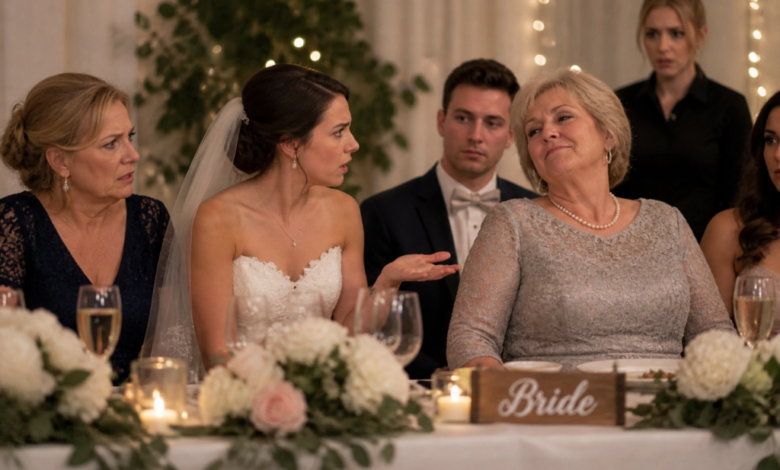
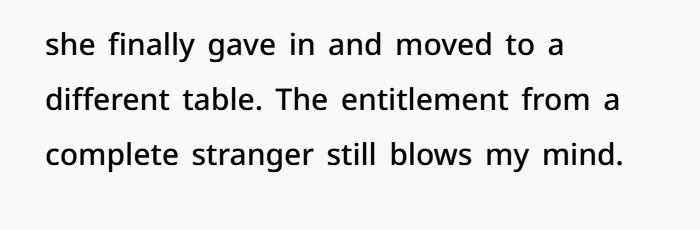
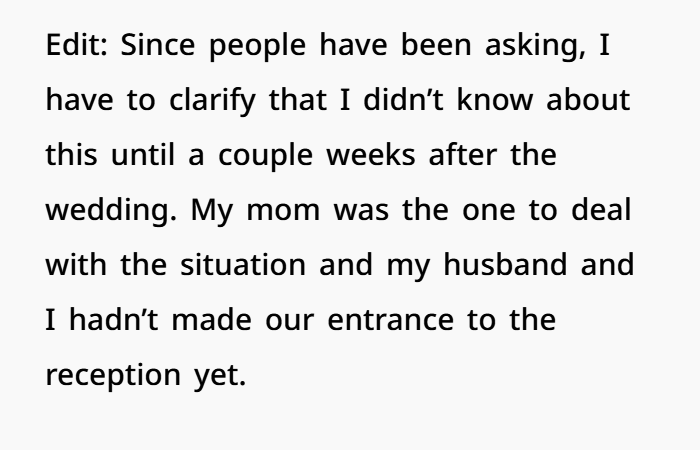
That’s when things crossed into full-on audacity. This stranger walked up to the head table and sat in the seat clearly reserved for the bride’s mom—right next to the bride’s own chair. Even after being told it wasn’t her seat, she tried to argue her way into staying, using the classic “I already sat down” excuse. It took multiple people stepping in before she finally moved. The wildest part? The bride didn’t even find out until weeks later—her mom handled it quietly to protect her daughter’s big day.
Alright, this situation might sound almost absurd, but it actually taps into some very real—and surprisingly common—issues around wedding etiquette, family dynamics, and what people call “guest overreach.”
Let’s start with the obvious: weddings are one of the few events where seating arrangements actually matter a lot. This isn’t just about where you sit to eat—it’s about hierarchy, relationships, and respect. The head table, especially, is reserved for the couple and their closest circle. Parents, bridal party, sometimes siblings. It’s not random. It’s intentional.
So when someone—especially a complete stranger—walks up and sits in a clearly designated seat at that table, it’s not just a mix-up. It’s a breach of basic social etiquette.
Now, to be fair, weddings can be confusing. Guests sometimes don’t know where to sit, especially if signage isn’t super clear. But that’s not what happened here. This woman was told directly that the seat wasn’t hers… and she still tried to stay. That shifts it from confusion to entitlement behavior.
And that “I already sat down so I can’t move” line? That’s actually a known social tactic. It’s a mild form of passive resistance, where someone tries to avoid correction by making it socially awkward for others to push back. It relies on people not wanting to escalate things. But in structured events like weddings, that doesn’t really fly—especially when the seat belongs to someone as important as the bride’s mother.
Now let’s zoom out a bit and talk about the family dynamics, because that’s where things get layered.
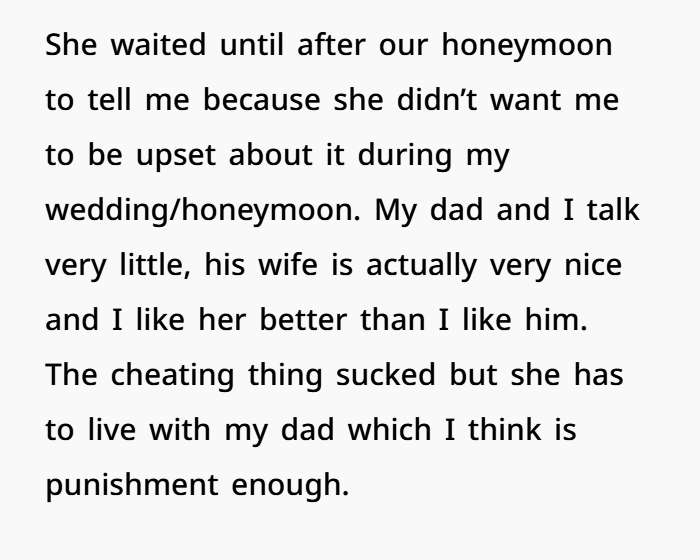
The bride’s parents divorced due to infidelity. That already creates a sensitive emotional backdrop. Then the father remarries, and the bride only meets the new wife as an adult. So there’s no long-standing bond there. It’s polite, maybe even friendly—but not deep.
Then suddenly, the stepmother’s extended family shows up. Uninvited (or at least not directly invited by the bride), unknown, and acting overly familiar. That’s a classic case of boundary confusion in blended families.
In healthy situations, new family members ease into roles. They don’t assume them. Especially not at milestone events like weddings.
Calling yourself “grandma” to someone you just met? That’s not warm—it’s intrusive. Relationships don’t work like that. Titles like “grandma” or “family” carry emotional weight, and trying to claim them instantly can feel forced, even disrespectful.
There’s also an interesting social psychology angle here. Some people, when entering unfamiliar environments (like a wedding where they don’t know many guests), try to assert belonging quickly. They overcompensate by acting like they’re more connected than they actually are. It’s not always malicious—but it can come off as overbearing or inappropriate.
Now, the real MVP in this story? The bride’s mom.
She handled the situation quietly, firmly, and without escalating drama. She made sure the seat was cleared, protected the structure of the event, and—most importantly—kept it from reaching her daughter during the wedding or honeymoon.
That’s emotional intelligence right there.
In event management terms, this is what you’d call “conflict containment.” The issue was resolved at the lowest level possible without disrupting the main experience. No scenes, no confrontations, no stress passed upward.
And honestly, that’s rare. A lot of wedding conflicts spiral because people react emotionally in the moment. But here, the mom prioritized her daughter’s peace over her own frustration.
Now, let’s touch on the dad’s role—or lack of one.
There’s no mention of him stepping in or correcting his in-laws’ behavior. That silence matters. In blended family situations, it’s usually the responsibility of the connecting person (in this case, the dad and his wife) to manage their side of the guest list. That includes setting expectations, explaining boundaries, and preventing exactly this kind of situation.
The fact that this woman felt comfortable enough to sit at the head table suggests that no one clearly communicated her place at the event. That’s not entirely her fault—but her refusal to move is.
Also worth noting: the bride mentions that she actually likes her stepmom more than her dad. That adds an interesting twist. It suggests the issue isn’t about rejecting the new family—it’s about respecting roles and boundaries.
And that’s really the core theme here.
Weddings are emotional, yes—but they’re also structured. There’s an unspoken contract: you respect the couple’s choices, their seating plan, their guest list. You don’t insert yourself into roles you haven’t been given.
Because at the end of the day, it’s not about where you sit.
It’s about knowing your place—and respecting someone else’s moment.
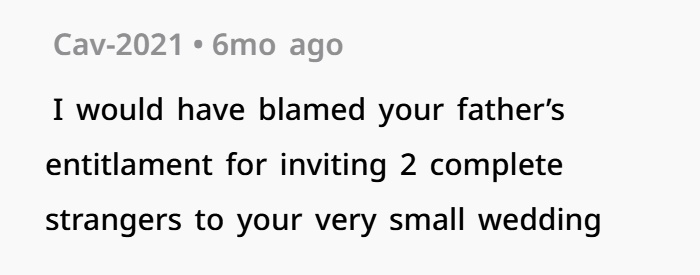
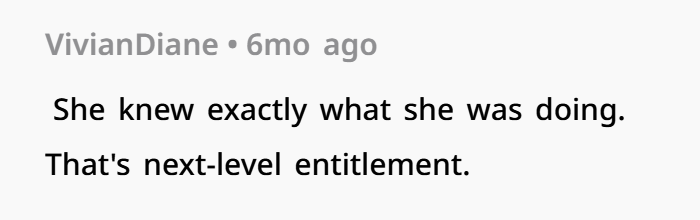
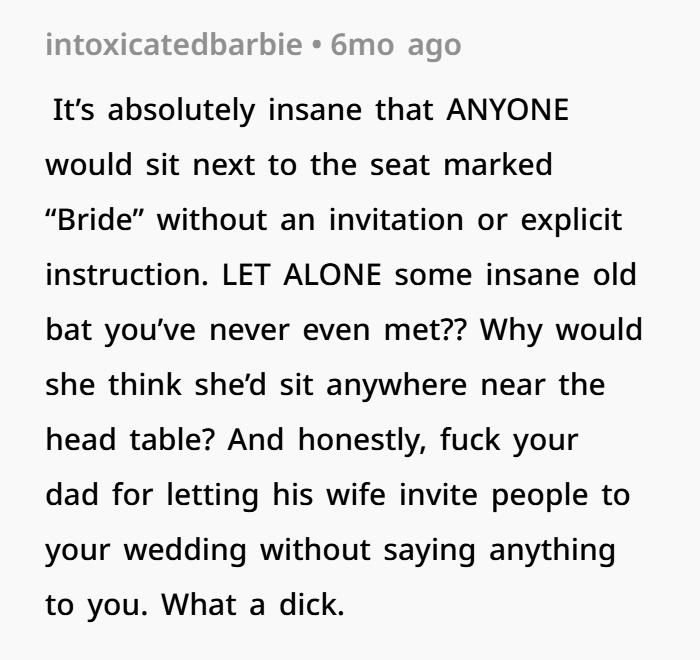
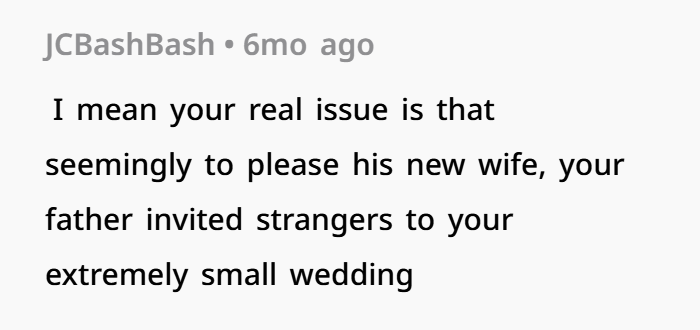
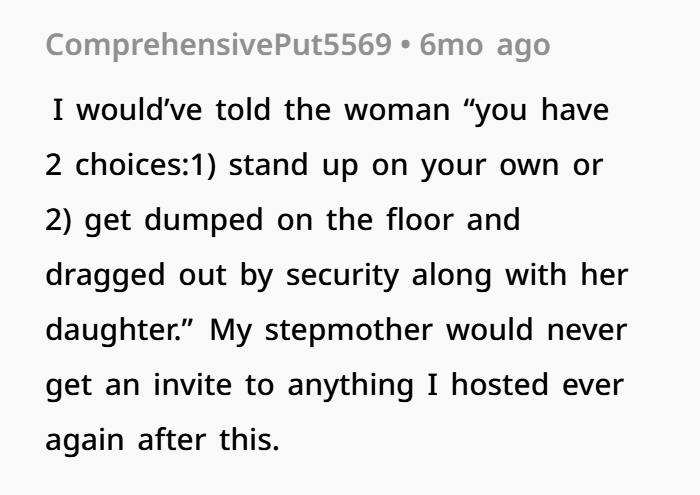
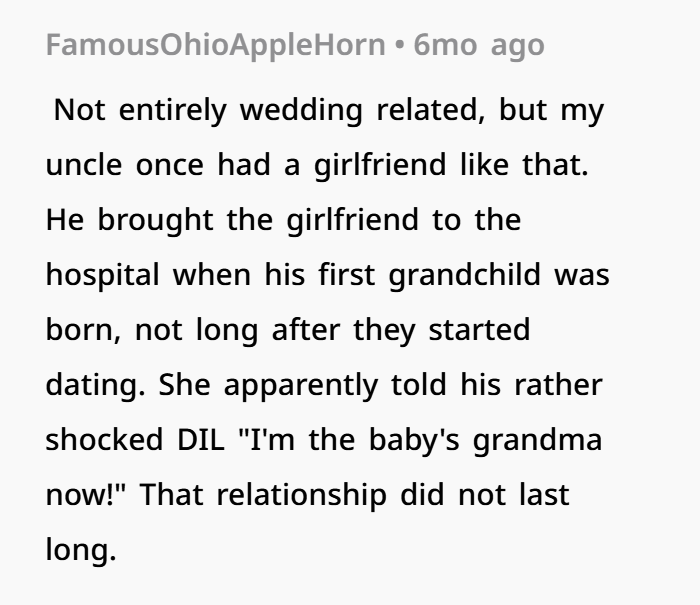
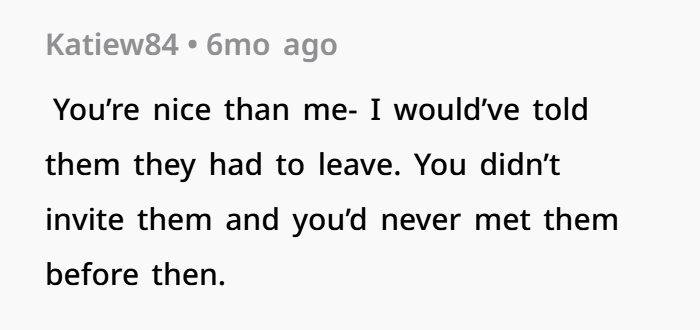
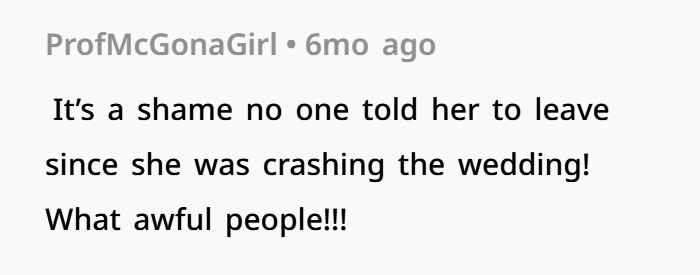
“Next level entitlement”: many people were shocked, but some agreed the dad was to blame
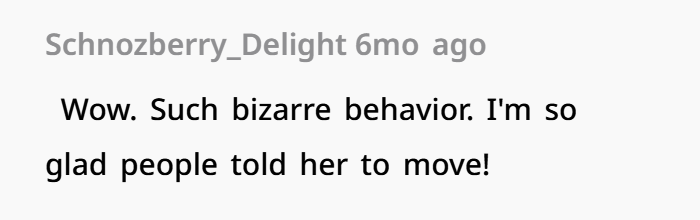
No, you’re not overreacting. If anything, you handled it perfectly—by not even having to deal with it at all.
The real takeaway here is how well your mom protected your day. She saw the problem, fixed it, and made sure you got to enjoy your wedding without unnecessary drama.
As for the stranger? Some people really do walk into situations like they’re the main character.
Good thing your mom reminded her she wasn’t.