5 Easy Ways to Style Shelves Like a Pro 5 Styling Secrets For Designer Shelves

The top five secrets to perfect designer shelves include anchoring the space with framed art, stacking books to create vertical height, mixing material textures, integrating personal character pieces, and balancing arrangements with negative space.
These foundational shelf styling ideas transform basic storage into intentionally designed focal points within your home.
Mastering these visual principles will elevate your daily living environment without requiring major renovations. Think of a beautifully styled shelf the way you would approach a well-coordinated outfit.
The arrangement requires structure to anchor the look, varied textures to add depth, and at least one compelling statement piece to draw the eye.
When these elements operate in harmony, shelves stop looking like catch-all storage and begin looking deliberately curated. Elevating your living room decor simply requires a shift in intention rather than an unlimited budget.
Secret 1: Anchor with Framed Art

Every shelf arrangement needs a visual anchor to command attention and establish a tonal foundation. Without a structural backdrop, even the most curated items can read as disorganized clutter.
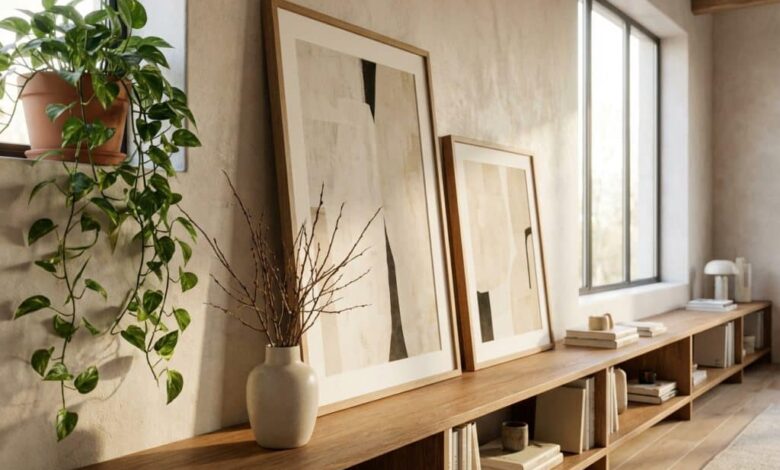
Framed art is the ultimate anchor, instantly creating depth and intentionality when layered at the back of a shelf.
To achieve a polished, editorial look, start with a coordinated Americanflat gallery wall frame set. Using a collection with consistent finishes provides a sophisticated canvas, allowing your more eclectic decor pieces to feel purposeful rather than random.
Designers rely on this visual repetition to create cohesion.
Repeating the same frame finish across multiple shelves ties the space together, while varying the frame sizes introduces the necessary rhythm and movement to keep the eye engaged.
| Pro Tip: Use a pre-curated gallery wall frame set to skip the stress of matching finishes. It ensures a professional, cohesive look with zero effort, perfect for anchoring your shelves quickly. |
Secret 2: Stack Books for Designer Height

Books are among the most versatile tools for elevating styled shelves. Most homes already contain a modest collection of reading material, and with a slight adjustment in how they are displayed, books become highly effective height-builders.
They effortlessly introduce structural variety to any arrangement while showcasing your personal reading interests.
The standard designer formula alternates between vertical stacks, which expose colorful spines, and horizontal stacks laid entirely flat. Those flat stacks function as instant pedestals for smaller decorative home accessories.
Rest a textured ceramic bowl or a brass candle snuffer on top of a flat stack, and a basic book collection immediately transforms into a sophisticated vignette.
A highly effective styling technique involves removing the dust jackets from hardcovers.
The underlying cloth-bound spines typically feature muted tones like cream, charcoal, or taupe, which ensures that other prominent shelf objects can shine. Grouping these bare books in odd numbers, specifically threes or fives, naturally feels more balanced and organized.
Secret 3: Mix Materials for Texture and Interest
A display heavily reliant on a single material often reads as visually flat and uninspired. Material contrast is essential for introducing tactile richness and the necessary complexity that makes a shelf engaging to look at.
According to academic design guidelines, the creation of contrast relies on differing qualities like size, texture, and shape. This interplay of textures is a foundational principle for sophisticated living room decor.
The easiest method for mixing materials is to ensure three specific categories are present within your display.
Try to incorporate a matte surface, a reflective surface, and an organic element into each major grouping. Placing a matte terracotta vase next to a polished brass bookend, accompanied by a small woven basket, covers all three categories efficiently.
The secret to pulling off material diversity is keeping the overall color palette relatively tight.
If the ceramics, metals, and botanicals share a cohesive, earthy tonal range, the varied textures add significant richness without inducing visual chaos.
Incorporating accessories with unexpected finishes provides precisely the right amount of contrast to keep the display dynamic.
Secret 4: Curating Character with Bespoke Touches

Structure provides the base, but character is what makes a space feel authentic. For a truly chic shelf, the goal is to move away from sterile displays and toward a curated gallery of personal style.
When sourcing pieces with handcrafted charm, artisan-made accents like Lori Mitchell figurines from Michelle’s aDOORable Creations offer the perfect storytelling detail for a premium statement. Their unique, creative intention brings a whimsical soul to a room that mass-produced items simply can’t replicate.
This curated approach transforms a house into a sanctuary of intentional design. A single whimsical element per vignette creates the visual tension needed to move beyond a sterile showroom look.
It’s an effortless way to rotate seasonal interest while keeping your interior palette feeling fresh, aspirational, and entirely your own
Secret 5: Balance Negative Space for Impact
The final and perhaps most crucial styling secret is learning the immense value of restraint. Negative space is not merely empty space; it serves as essential visual breathing room that lets your decor shine.
A shelf packed tightly from edge to edge communicates noise and clutter, whereas a shelf with intentional empty gaps communicates confidence.
A practical rule of thumb is to leave at least one-third of every shelf visually open.
Instead of spacing items out at perfectly even intervals, group objects into deliberate, tight clusters. Leaving clear space between those groupings is what allows the eye to actually register and appreciate the items on display.
Utilize the step back test continuously while arranging your newly styled shelves.
Step six feet away from the bookcase and observe where your eye naturally lands to assess the visual weight. If everything is competing equally for attention and the shelf feels visually heavy, the correct move is to remove an item rather than add one.
| Warning/Important: Avoid the temptation to fill every inch of your shelving. Overcrowding creates visual noise that hides your best pieces. Remember, intentional space is what makes your decor look professional. |
Now It’s Your Turn
Achieving a cohesive, designer-quality aesthetic requires structure from anchored frames, dynamic height from stacked books, depth through mixed materials, personality from unique character pieces, and crucial breathing room via negative space.
Just like a well-tailored garment, each element serves a distinct purpose to create a complete, considered look.
Mastering these concepts requires no special expertise, only a willingness to experiment with your existing items.
Start by establishing a strong anchor piece, introduce a statement item, and allow the remaining textures and heights to fall into place. The most beautifully styled spaces are constantly evolving, so embrace the process of rearranging until the balance feels exactly right.